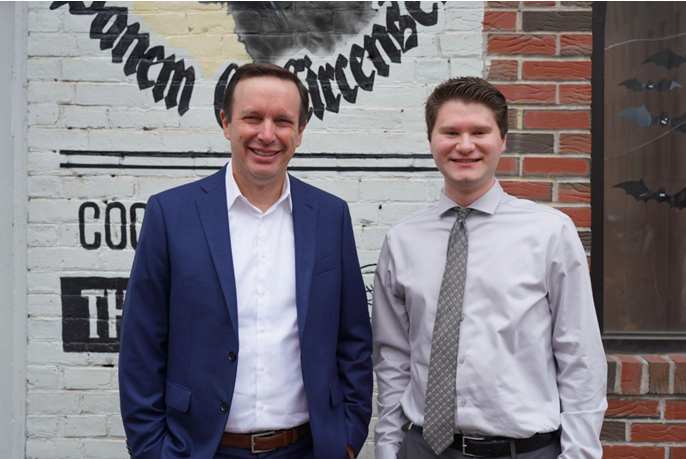
GA Patrick Internship Spotlight – Inside the U.S. Senate: My Behind-the-Scenes Experience
Public service is often talked about in big, abstract ways, but my summer internship in Senator Chris Murphy’s office in 2024 showed me what those ideas actually look like when they’re lived out day to day. Politics isn’t a distant, one‑dimensional world. It sits right at the intersection of people, communities, and the issues that shape their lives. This internship gave me the chance to step into that intersection of people, communities and the and see what “serving the public” really means. 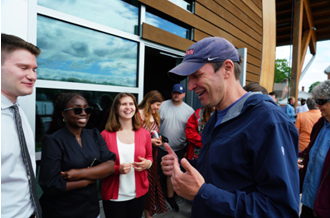
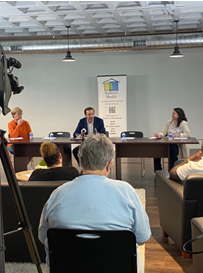
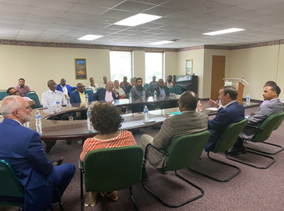
 One of the first things that struck me was how much of the work starts with listening. Whether it was a roundtable in Torrington about homelessness and housing insecurity or conversations with local leaders and community members, I saw how important it is to make space for voices that often go unheard. These meetings were honest, sometimes difficult conversations meant to understand real challenges and find real solutions for communities across Connecticut.
I also got to see how national policy connects to everyday life. At a listening session with former Federal Trade Commission Chair Lina Khan, the focus was on non‑compete clauses and how they affect wages and innovation. Hearing directly from workers and advocates made it clear that policies that seem technical or far‑removed can shape someone’s economic opportunities in very real ways. It reminded me that good policymaking requires both expertise and a genuine understanding of people’s lived experiences.
Another part of the internship that stayed with me was the Senator’s commitment to meeting people where they are. His walk across Connecticut provides a hands‑on approach to representation. Instead of expecting people to come to him, he went to them. It was a powerful reminder that accessibility and accountability are core parts of public service.
Throughout the summer, I saw just how wide‑ranging a senator’s responsibilities are. One day we’d be talking about reproductive healthcare access in West Hartford, the next we’d be meeting with faith leaders, and the next we’d be hearing from opioid task forces working to reduce overdose deaths. There were conversations about arts education, environmental conservation, violence prevention, and so much more. Each experience showed me how multifaceted public service is and how many diverse issues shape the well-being of a community.
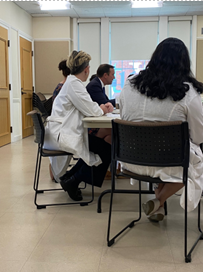
But the thread running through all of it was people. Whether the topic was housing insecurity, economic fairness, or anti‑violence programs, the work always came back to improving lives. It became clear that meaningful change doesn’t happen in isolation. It happens through collaboration, persistence, and a willingness to listen.
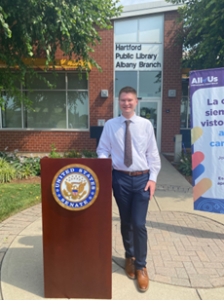
Looking back on my time in the Hartford office, I realize how much this internship changed the way I think about public service. Before, politics felt distant, like it was something happening in Washington or in headlines. Now, I see it as deeply personal and community‑driven. I had the chance to talk with constituents, help address their concerns, and learn about the issues that matter most across our state.
Like many students, I’m still figuring out what direction I want to take in the future. But this experience gave me clarity in one important way: I want to do work that centers people, that requires listening, and that aims to make a tangible difference.
And it’s okay not to have every step mapped out. Experiences like this remind me that growth comes from stepping into new environments, asking questions, and staying open-minded. Interning for Senator Murphy showed me what it
means to “do the work of the people,” and that’s something I’ll carry with me as I continue exploring my path forward.
Want to be a part of the fun? Applications for a 2026 summer internship in Senator Murphy’s office are due April 3rd at 11:59 pm! Find out more information, including how to apply, here: https://www.murphy.senate.gov/services/internships.
P.S.: I’m happy to talk more about my experiences!